Introduction
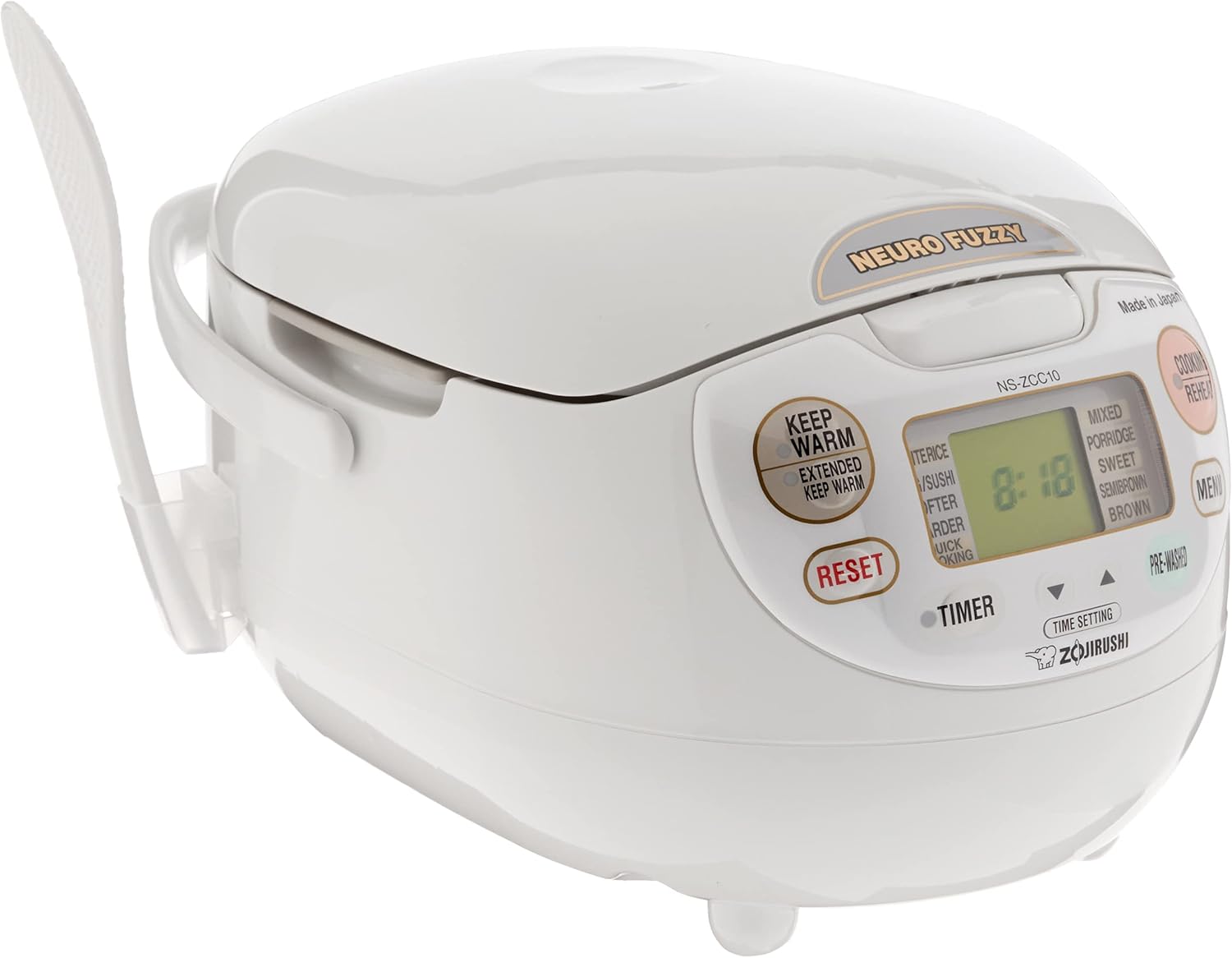
Rice has been a dietary staple across countless cultures for thousands of years, and the way we prepare it has evolved dramatically from simple pots over open flames to sophisticated countertop appliances designed for consistency and convenience. Among the many rice cookers available today, the Zojirushi NS-ZCC10 5-1/2-Cup Neuro Fuzzy Rice Cooker and Warmer occupies a notable place in the mid-to-premium segment of kitchen appliances. This article explores what this particular model offers, how it fits into a modern kitchen, and what factors are worth considering before deciding whether it aligns with your cooking habits.
Zojirushi, a Japanese company with a long history in thermal and kitchen technology, has built a reputation for engineering appliances that prioritize precision. The NS-ZCC10 represents one iteration of their “Neuro Fuzzy” line, a term that refers to the fuzzy logic microcomputer technology embedded in the cooker. Rather than diving into promotional language, this piece aims to walk through the practical realities of what fuzzy logic rice cooking means, how the appliance functions, and who might find it genuinely useful in their day-to-day routine.
What Does “Neuro Fuzzy” Actually Mean?
Before exploring the features, it helps to understand the terminology. “Fuzzy logic” in this context is not a marketing gimmick but a reference to a specific type of computational approach used in the cooker’s internal microprocessor. Traditional rice cookers typically operate with a simple on/off mechanism triggered by temperature thresholds. Once the water boils away and the internal temperature rises past 212°F (the boiling point of water), the cooker assumes the rice is done and switches to a “keep warm” setting.
Fuzzy logic technology, by contrast, allows the microcomputer to make more nuanced, real-time adjustments. It can interpret variables such as room temperature, the ratio of rice to water, and even subtle changes in cooking behavior, then adjust heating patterns accordingly. This means the cooking process is less rigid and more adaptive, which can be particularly useful for people who don’t always measure rice and water with laboratory precision.
The “Neuro” component refers to a further refinement of this logic system, incorporating additional algorithms that Zojirushi has developed over years of research into rice preparation across different rice varieties and cooking conditions.
Key Features
Multiple Cooking Menu Settings
One of the more practical aspects of the NS-ZCC10 is its range of pre-programmed menu options. Rather than treating all rice as identical, the cooker includes distinct settings for:
- White rice (regular and sushi varieties)
- Brown rice
- Porridge (okayu)
- Sweet rice
- Rinse-free rice
- Steel-cut oatmeal
This variety matters because different types of rice have different starch compositions, densities, and ideal absorption rates. A short-grain sushi rice, for instance, behaves quite differently during cooking compared to a long-grain brown rice, which has a tougher bran layer and generally requires longer cooking times and more water. Having dedicated settings means the cooker’s internal algorithms adjust heating cycles specifically for each rice type rather than applying a one-size-fits-all approach.
Extended Keep-Warm Function
The keep-warm feature is a defining characteristic of many Zojirushi cookers, and the NS-ZCC10 continues this tradition. Once rice finishes cooking, the unit can maintain the rice at a food-safe, palatable temperature for extended periods without significantly degrading texture or causing the rice to dry out or develop an unpleasant odor — a common complaint with lower-end warming systems.
Delay Timer
A built-in delay timer allows users to set the cooker to begin its cycle at a later time, which can be useful for meal planning. For example, someone could add rice and water in the morning and set the timer so that freshly cooked rice is ready by the time they return home in the evening, or ready first thing in the morning for breakfast preparation.
Reheat Cycle
Beyond the standard keep-warm function, the cooker includes a reheat cycle designed to bring previously cooked (and potentially cooled) rice back to an appropriate serving temperature without the graininess or unevenness that can result from microwave reheating.
Digital Display and Voice/Melody Prompts
The unit features a clear digital display along with audible prompts, including a melody or voice notification (depending on regional settings) that signals when cooking is complete. This can be a helpful accessibility feature for those who prefer auditory cues over needing to check a display.
Nonstick Inner Cooking Pan
The inner pan is designed with a nonstick coating, which generally makes cleanup more manageable and helps prevent rice from adhering stubbornly to the bottom or sides during the cooking or warming cycles.
Retractable Power Cord
A retractable cord is a small but often appreciated design detail, allowing for tidier storage and reduced cord clutter on countertops.
How It Can Be Used
While the primary function is, unsurprisingly, cooking rice, the versatility of the NS-ZCC10 extends beyond a single grain. Here are some practical use cases worth considering:
Everyday Rice Preparation
For households that consume rice regularly — whether as a side dish, a base for stir-fries, or part of a grain bowl — having a dedicated appliance can simplify meal prep considerably. Instead of monitoring a pot on the stovetop, the cooking process becomes largely hands-off.
Meal Prepping for the Week
Because the keep-warm function is designed to preserve rice quality over several hours, some people use rice cookers like this one as part of a broader weekly meal-prep routine, cooking a larger batch and portioning it out over several days.
Porridge and Congee
The dedicated porridge setting opens up possibilities beyond plain rice. Congee, a rice porridge common in various Asian cuisines, requires a different water ratio and longer, gentler cooking process. Having a setting specifically calibrated for this can save the guesswork involved in adapting a standard rice-cooking method.
Steel-Cut Oatmeal
For those looking to diversify breakfast options, the oatmeal setting allows the appliance to double as a grain-cooking tool outside the world of rice entirely, which may appeal to users looking to get more use out of a single kitchen appliance.
Sweet Rice for Desserts or Traditional Dishes
Sweet rice (sometimes called glutinous or sticky rice) is used in a variety of traditional dishes and desserts across Asian cuisines. Having a setting calibrated for its unique starch content can help achieve a more consistent texture than attempting the same dish with a generic rice-cooking cycle.
Who It May Be Suitable For
This particular model tends to appeal to a specific range of users, though it’s worth being candid that it may not be necessary for everyone.
Households that eat rice frequently. If rice is a dietary staple rather than an occasional side dish, investing in an appliance with more refined cooking logic may offer more consistent results over time compared to stovetop methods or simpler rice cookers.
People who cook multiple types of rice or grains. Those who regularly switch between white rice, brown rice, sushi rice, or porridge may find the dedicated settings more useful than a single all-purpose cooking mode.
Those who value hands-off cooking. Because the fuzzy logic system adjusts automatically, this can appeal to people who prefer not to babysit a pot or manually adjust heat levels during cooking.
Users who appreciate small quality-of-life features. The delay timer, reheat function, and audible completion signals are the kinds of details that may not be essential but can meaningfully streamline a kitchen routine over time.
On the other hand, individuals who cook rice only occasionally, have limited kitchen storage space, or are looking for the most basic and inexpensive way to prepare rice might find that a simpler cooker meets their needs just as well.
Important Things to Consider
Capacity Considerations
The “5-1/2-cup” designation refers to uncooked rice capacity measured in the cooker’s included measuring cup (which is typically smaller than a standard US cup, closer to 180ml). This generally translates to enough cooked rice for a household of roughly four to six people, depending on portion sizes and how rice fits into the broader meal. Larger households or those who entertain frequently may want to compare this capacity against their typical needs.
Countertop Footprint
Rice cookers with more advanced internal components, including induction heating or complex microprocessor systems, sometimes have a larger physical footprint than basic models. It’s worth measuring available counter or storage space beforehand, particularly for smaller kitchens.
Cleaning and Maintenance
While the nonstick inner pan simplifies most cleaning tasks, components like the inner lid, steam vent, and condensation collector typically require regular attention to prevent buildup or odor over time. Reviewing the manufacturer’s care instructions can help maintain long-term performance.
Learning the Settings
Because the unit offers multiple menu options, there can be a brief adjustment period for users unfamiliar with fuzzy logic cookers, particularly if transitioning from a basic single-setting model or stovetop cooking. Referring to the included instruction manual for water-to-rice ratios specific to each setting is generally recommended for best results.
Electrical and Regional Compatibility
As with many imported kitchen appliances, it’s worth confirming voltage compatibility and plug type if purchasing from outside the region the product was originally designed for.
Comparing General Categories of Rice Cookers
Rather than comparing specific competing products, it can be more useful to understand how different categories of rice cookers generally differ, which can help clarify where a fuzzy logic model like this one fits.
Basic On/Off Rice Cookers
These are typically the most affordable and simplest option. They operate using a basic thermostat that switches from “cook” to “warm” once the water boils away. They tend to work reasonably well for straightforward white rice preparation but generally offer little flexibility for other grains or rice varieties.
Fuzzy Logic Rice Cookers
This category, which includes the NS-ZCC10, incorporates microprocessor-based adjustments during the cooking cycle. These models tend to offer more consistent results across different rice types and often include additional settings for porridge, sweet rice, or other grains.
Induction Heating (IH) Rice Cookers
A step above fuzzy logic models, induction heating cookers use electromagnetic currents to heat the inner pan directly and more evenly, rather than relying solely on a heating element beneath the pan. These tend to be positioned at a higher price point and are often marketed toward users seeking more precise temperature control throughout the entire pan surface.
Multi-Function Electric Pressure Cookers
Some users compare dedicated rice cookers to multi-function pressure cookers that include a rice-cooking setting among many other functions (slow cooking, sautéing, steaming, etc.). These appliances offer broader versatility but may not always match the specialized rice-cooking consistency that dedicated rice cookers, particularly fuzzy logic or induction models, are designed to achieve.
Each category serves different priorities — affordability, versatility, or specialized consistency — and understanding these distinctions can help clarify what matters most for a given kitchen.
Frequently Asked Questions
Does this rice cooker work for grains other than rice? Yes, based on its included settings, it can be used for steel-cut oatmeal and porridge in addition to various rice types. However, it is primarily designed and optimized for rice preparation.
How long does the keep-warm function typically last? While specific durations can vary, Zojirushi’s keep-warm technology is generally designed to maintain rice quality for several hours without significant degradation in taste or texture, though checking the manufacturer’s specific guidance is advisable for extended periods.
Is the inner cooking pan dishwasher safe? This can vary by model and manufacturer guidance, so it’s best to consult the included instruction manual or Zojirushi’s official documentation for specific care instructions.
Does it require distilled or filtered water? Most rice cookers, including this one, are designed to work with regular tap water, though some users choose filtered water for taste preferences unrelated to the appliance’s functionality.
Can it cook smaller quantities of rice, or does it need to be filled close to capacity? Fuzzy logic cookers are generally designed with enough flexibility to handle a range of quantities within their stated capacity, though very small quantities (such as a single serving) may cook less predictably than mid-range quantities.
What is the difference between this and a basic Zojirushi rice cooker? The primary difference lies in the fuzzy logic microcomputer system, which allows for more adaptive cooking adjustments and a wider range of menu settings compared to Zojirushi’s more basic mechanical models.
Conclusion
The Zojirushi NS-ZCC10 5-1/2-Cup Neuro Fuzzy Rice Cooker represents a category of kitchen appliance built around the idea that rice preparation benefits from precision and adaptability rather than a single fixed cooking method. Its fuzzy logic system, multiple menu settings, and extended keep-warm functionality are designed to address the practical challenges that come with cooking different rice varieties and grains consistently.
Whether this particular appliance makes sense for a given household depends largely on how frequently rice is part of the diet, how much kitchen counter or storage space is available, and how much value is placed on features like delay timers, reheat cycles, and multi-grain versatility. For those who cook rice often and want a more hands-off, adaptable process, it may be worth exploring further. For more occasional rice preparation, simpler and more compact options might be equally sufficient.
As with any kitchen appliance investment, taking time to consider your household’s actual cooking habits — rather than the full range of features an appliance offers — is generally the most useful starting point.
Leave a Reply