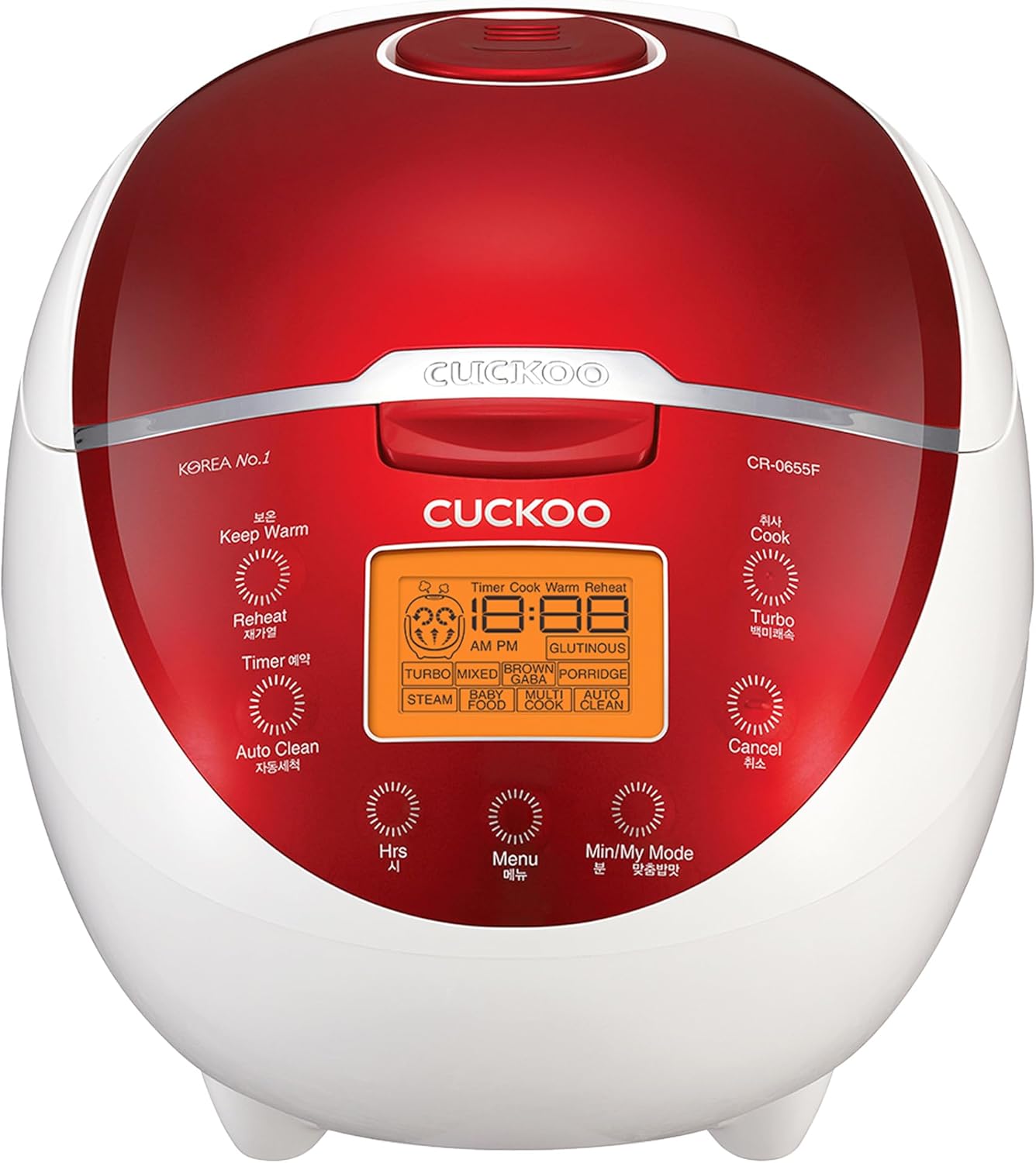
Rice is one of those foods that seems simple until you actually try to get it consistently right. Anyone who has dealt with scorched bottoms, mushy grains, or rice that turns out perfect one day and disappointing the next knows that the humble pot of rice is more finicky than it looks. This is where a dedicated rice cooker earns its place in the kitchen, and models built around “fuzzy logic” technology, like the CUCKOO Micom Rice Cooker CR-0655F, aim to take the guesswork out of the process entirely.
This article walks through what this particular appliance offers, how people commonly use it, who tends to benefit most from owning one, and what to think about before adding it to your kitchen lineup. The goal here isn’t to tell you it’s the greatest thing ever made — it’s to give you a grounded, informative look at what this type of rice cooker actually does.
What Is the CUCKOO CR-0655F, Exactly?
The CR-0655F is a mid-capacity rice cooker designed to prepare up to 6 cups of uncooked rice, which typically expands to around 12 cups of cooked rice. That range makes it a reasonable fit for small to medium households, or for anyone who regularly cooks rice in batches for meal prep, gatherings, or multi-day meal planning.
What separates this cooker from a basic on/off rice pot is its “Micom” system — short for microcomputer. Rather than simply heating until the water boils away and then shutting off, a microcomputer-controlled cooker actively monitors temperature and adjusts heating levels throughout the cooking cycle. This is often referred to as fuzzy logic technology, a term borrowed from control systems engineering where the appliance makes small, continuous adjustments rather than operating in a rigid, binary way.
In practical terms, this means the cooker is designed to respond to variables like the amount of rice, the water-to-rice ratio, and even ambient conditions, adjusting its cooking pattern accordingly instead of applying the exact same heat cycle every single time regardless of what’s inside the pot.
Key Features Worth Knowing About
Fuzzy Logic Temperature Control
The core selling point of this cooker is its ability to modulate heat throughout the cooking process. Instead of a single heating element running at one intensity until a timer or sensor cuts it off, the fuzzy logic system is intended to fine-tune the cooking curve — increasing or decreasing heat at different stages to account for texture and moisture levels. This is particularly relevant for people who cook different types of rice, since short-grain, long-grain, and glutinous varieties all behave differently under heat.
Multiple Cooking Functions
This model isn’t limited to a single “white rice” setting. It typically includes multiple presets for different rice types and cooking styles, along with a steaming function that extends its usefulness beyond rice alone. A steaming tray or insert allows the appliance to double as a vegetable or dumpling steamer, which is a meaningful bonus for anyone trying to reduce the number of single-purpose gadgets cluttering their countertop.
Delay Timer
The delay timer function lets you load the pot with rice and water in advance and set it to begin cooking at a later time, so that it finishes right when you need it — for instance, timed to be ready when you get home from work or right before dinner guests arrive. This is a common feature in higher-end rice cookers and tends to be genuinely useful for people with predictable daily schedules.
Keep Warm Setting
Once cooking is complete, the keep-warm function maintains the rice at a safe, servable temperature without continuing to cook it or drying it out. This is especially helpful during events, family dinners, or any situation where people are serving themselves over an extended period rather than eating all at once.
Non-Stick Inner Pot
The inner cooking pot has a non-stick coating, which serves two purposes: it helps prevent rice from sticking and burning onto the surface, and it makes cleanup considerably easier compared to cooking rice in a plain stainless steel or uncoated pot. Non-stick surfaces do require some basic care to preserve their coating over time, which is worth keeping in mind regardless of which brand or model you choose.
Compact Design and Color
The CR-0655F is offered in a red finish, giving it a distinct look compared to the stainless steel or plain white appliances that dominate most kitchens. For anyone who likes their countertop appliances to have a bit of personality, this is a small but noticeable design choice.
How It Can Be Used
While the primary function is, unsurprisingly, cooking rice, the versatility of a Micom-style cooker extends further than many people expect.
Everyday rice preparation. The most obvious use is cooking daily portions of white rice, brown rice, or specialty rice varieties for meals. Because of the multiple presets, users aren’t limited to one type of grain — the appliance is generally built to handle different rice textures with corresponding settings.
Meal prepping in batches. Given its capacity of up to 12 cups cooked, this cooker suits people who like to prepare rice in bulk for the week ahead, then portion it out for lunches or dinners as needed.
Steaming vegetables or proteins. With the steaming attachment, the appliance can be used to prepare vegetables, dumplings, or fish alongside or separately from the rice, which can help simplify meal preparation by reducing the number of pots and pans in rotation.
Cooking grains beyond rice. Some users experiment with cooking other grains, such as quinoa or certain types of porridge, using the water-absorption cooking method that these cookers are built around. Results can vary depending on the grain, so this is more of an exploratory use rather than a core function.
Preparing rice-based dishes for entertaining. Because of the delay timer and keep-warm functions, this type of cooker lends itself well to hosting situations, where rice needs to be ready at a specific time and stay warm through a longer meal.
Who It May Be Suitable For
This rice cooker tends to appeal to a fairly broad range of households, though certain groups may find it particularly useful.
Small to medium-sized families. With a 6-cup uncooked capacity, this cooker is generally well-matched to households of two to six people, depending on how much rice is typically consumed per meal.
People who eat rice frequently. For households where rice is a dietary staple rather than an occasional side dish, having a dedicated appliance that consistently produces good texture can meaningfully reduce daily cooking friction.
Home cooks who value convenience features. The delay timer and keep-warm settings are aimed at people who want flexibility around meal timing, rather than those who prefer to cook rice fresh, immediately before eating, every single time.
Anyone consolidating kitchen appliances. Because it also functions as a steamer, this cooker may appeal to people trying to reduce the number of specialized gadgets they own, particularly in smaller kitchens where counter and storage space is limited.
That said, it may be less necessary for people who rarely eat rice, who only cook single-serving portions, or who already own a multi-function cooker (such as certain pressure cookers) that handles rice adequately for their needs.
Important Things to Consider
No kitchen appliance is a universal fit, and it’s worth thinking through a few practical details before deciding whether this model matches your needs.
Counter space and storage. Rice cookers with multiple functions and a sizable capacity tend to have a larger footprint than basic models. It’s worth measuring your available counter or storage space beforehand, particularly if your kitchen is on the smaller side.
Learning the presets. Multi-function cookers often come with several settings tailored to different rice types (white, brown, mixed, glutinous, and so on). Getting consistent results usually means taking a little time to understand which preset corresponds to which type of rice, rather than assuming one setting works for everything.
Non-stick coating maintenance. As with any non-stick cookware, using appropriate utensils (typically silicone, wood, or plastic rather than metal) and following recommended cleaning practices will help preserve the coating over the appliance’s lifespan.
Water-to-rice ratios still matter. Fuzzy logic technology helps the appliance adjust for variables during cooking, but it doesn’t eliminate the need for a reasonably accurate starting ratio of water to rice. Following the manufacturer’s guidelines closely, especially for the first few uses, tends to produce more predictable results.
Electrical and voltage considerations. As with any electric appliance, it’s a good idea to confirm the unit is compatible with your region’s standard voltage and outlet type before purchasing, particularly if you’re buying from outside your home country.
Cleaning routine. While the inner pot is non-stick and generally easy to wipe down, other components — such as the lid, steam vent, and exterior — may require periodic cleaning to prevent buildup or odor over time. Checking the manufacturer’s care instructions can help maintain performance.
Comparing General Categories of Rice Cookers
To put this appliance into context, it helps to understand the broader landscape of rice cooker types available on the market today. This isn’t about ranking specific brands, but rather understanding the general categories so you can judge where a Micom-style cooker like this one fits.
Basic (on/off) rice cookers. These are the simplest and generally most affordable option. They typically operate with a single heating cycle that shuts off once the water is absorbed or a temperature threshold is reached. They can work fine for straightforward white rice preparation but usually lack presets, timers, or fine temperature control.
Micom (microcomputer-controlled) rice cookers. This category, which includes the CR-0655F, uses sensors and programmed logic to adjust cooking temperature and timing dynamically. These cookers tend to offer more consistent texture control, multiple grain presets, and extra functions like delay timers and keep-warm settings.
Induction heating (IH) rice cookers. These represent a more advanced (and typically pricier) category, using electromagnetic induction to heat the entire pot evenly rather than just the base. IH cookers are often marketed toward users who want very precise temperature control, sometimes at a higher cost than Micom models.
Multi-cookers with rice functions. Appliances like electric pressure cookers often include a “rice” setting as one of many functions. These can be convenient for kitchens wanting an all-in-one appliance, though dedicated rice cookers are generally designed with rice texture as the primary focus rather than as one feature among many.
Understanding these categories can help clarify that a Micom cooker like this one sits in a middle tier — offering more precision and functionality than a basic model, without necessarily reaching the price point or complexity of induction heating systems.
Frequently Asked Questions
Does fuzzy logic technology guarantee perfect rice every time? No cooking technology can guarantee a perfect result in every scenario, since factors like rice freshness, water quality, and measuring accuracy still play a role. However, fuzzy logic systems are generally designed to reduce variability compared to basic cookers by adjusting the cooking process based on real-time conditions.
Can this rice cooker handle brown rice or other whole grains? Micom rice cookers with multiple presets typically include settings for brown rice and other grain types, since these often require different water ratios and cooking times compared to white rice. Checking the specific presets available on this model will clarify which grains it’s designed to handle.
Is the steaming function separate from the rice cooking function? Generally, steaming attachments are designed to sit above or alongside the rice as it cooks, allowing users to prepare vegetables or other foods simultaneously, or to steam items independently using the appropriate setting.
How long does the keep-warm function typically last? This varies by model and manufacturer specification, but keep-warm settings are generally designed to hold rice at a safe serving temperature for an extended period after cooking completes, without significantly degrading texture. For specific duration details, checking the product’s official specifications is recommended.
Is a 6-cup capacity too large for a small household? Not necessarily. Since the measurement refers to uncooked rice capacity, a 6-cup model offers flexibility — you can cook smaller batches when needed while still having the option for larger quantities when entertaining or meal prepping.
Does the non-stick coating wear out over time? Like most non-stick cookware, coatings can degrade gradually with heavy use, especially if metal utensils or abrasive cleaning tools are used. Following the manufacturer’s care instructions can help extend the coating’s lifespan.
Is this appliance difficult to clean? Generally, non-stick inner pots are designed to simplify cleanup considerably compared to cooking rice in an uncoated pot. Other components like the lid and steam vent may need occasional attention, but this is standard across most rice cookers in this category.
Final Thoughts
The CUCKOO Micom Rice Cooker CR-0655F represents a fairly comprehensive approach to what a modern rice cooker can offer: fuzzy logic temperature control, multiple cooking presets, a sizable capacity range, a delay timer, a keep-warm function, and steaming versatility, all wrapped into a single countertop appliance. For households that eat rice regularly or want more consistency and flexibility than a basic cooker provides, this type of appliance is worth understanding in more detail.
As with any kitchen purchase, it’s worth weighing your household size, cooking habits, and available counter space before deciding if this particular model aligns with your needs. Appliances like this tend to offer the most value to people who will actually use the range of functions available, rather than those who only need the most basic rice-cooking capability.
Leave a Reply