There’s a quiet shift happening in how people think about their kitchens. Fewer households are cooking for crowds every night. More people are living alone, sharing apartments with one or two others, or simply trying to avoid the waste that comes from making too much food. Appliances built for big families don’t always make sense in that context, which is part of why smaller-capacity kitchen tools have become more relevant than they used to be.
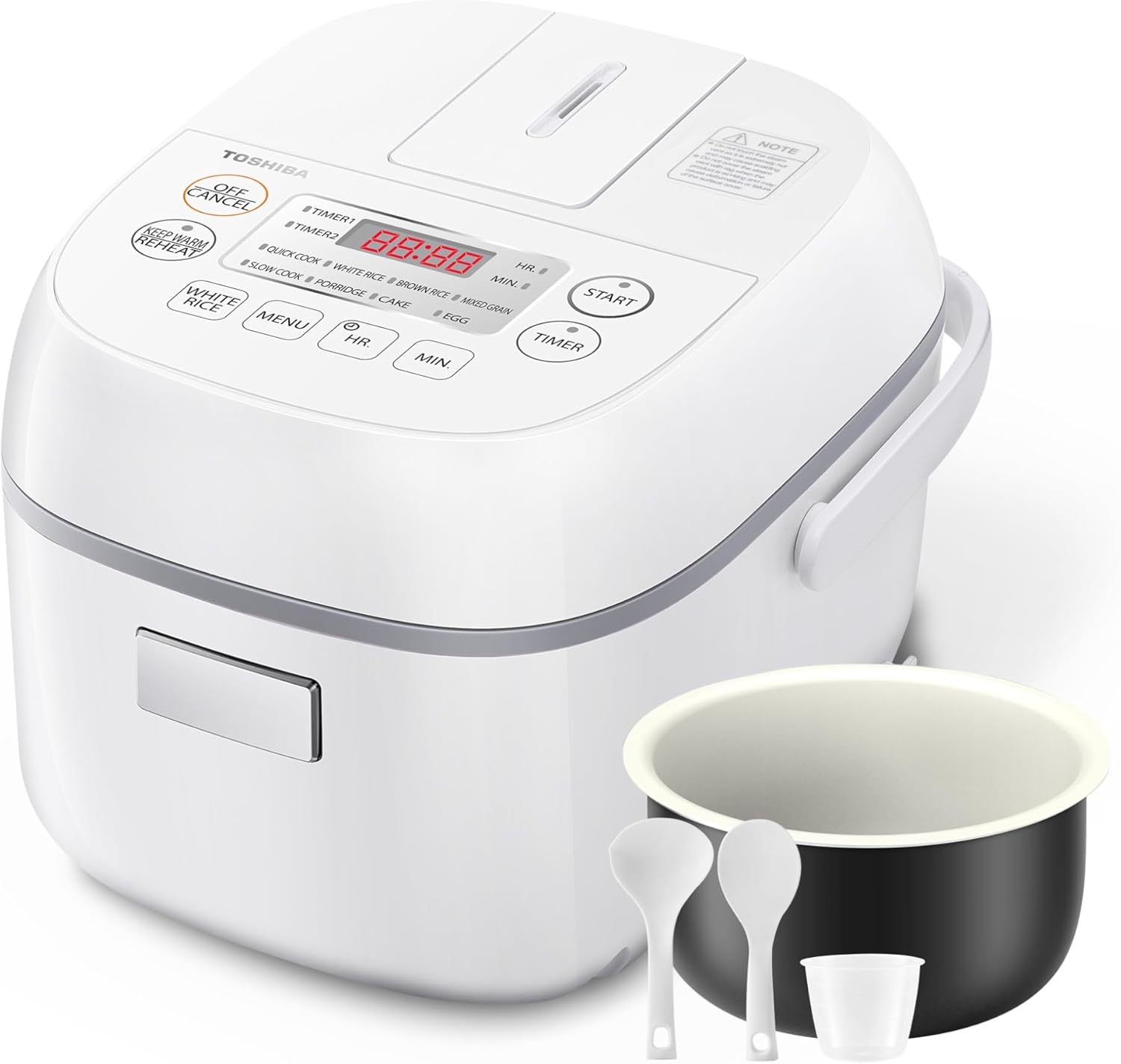
The Toshiba Mini Rice Cooker, designed for 3 cups of uncooked rice and built to serve roughly one to three people, fits into that shift. It’s not trying to be a do-everything countertop machine. Instead, it focuses on a narrower job: cooking rice well, steaming a few vegetables or proteins alongside it, and keeping meals warm without much fuss. This article walks through what the cooker offers, how it might fit into different kitchens, and what’s worth thinking about before deciding whether it’s the right fit for your routine.
Why Rice Cookers Still Matter in a World of Multi-Cookers
It might seem like dedicated rice cookers have been overshadowed by pressure cookers and multi-function appliances that promise to do a dozen things at once. But there’s an argument to be made that specialization has its own value. A rice cooker built specifically for rice tends to handle that one task with more consistency than a general-purpose appliance trying to juggle rice, yogurt, slow cooking, and sautéing all in one chassis.
Toshiba’s approach with this mini cooker leans into that idea. Rather than adding a long list of programmable functions, the focus stays on getting rice texture right, offering a steaming option for vegetables or other foods, and making the whole process require minimal attention. For someone who eats rice regularly but doesn’t need to cook large batches, that kind of focused design can simplify daily cooking rather than complicate it.
Key Features Worth Understanding
Fuzzy Logic Technology
One of the more technical-sounding terms associated with this cooker is “fuzzy logic.” In practical terms, fuzzy logic refers to a type of built-in computer chip that adjusts cooking time and temperature based on conditions inside the pot, rather than following a single fixed program regardless of circumstances. Traditional rice cookers often use a simple on/off mechanism triggered by temperature alone, which can lead to inconsistent results depending on the amount of rice, the water ratio, or even the type of rice being used.
Fuzzy logic systems, by contrast, are designed to respond to these variables in real time. This means the cooker can make micro-adjustments throughout the cooking cycle, which may help produce more consistent texture whether you’re cooking a small portion or closer to the appliance’s 3-cup capacity. It’s worth noting that “fuzzy logic” doesn’t mean the appliance is smart in the way a phone or computer is smart — it’s a narrower, task-specific kind of automation aimed at one job: cooking rice more evenly.
One-Touch Cooking
Simplicity is a recurring theme with this model. The one-touch operation means that, in most cases, starting the cooking process involves adding rice and water, closing the lid, and pressing a single button. There’s no need to select from a long menu of settings or guess which mode applies to your situation. For anyone who finds multi-function appliances more confusing than helpful, this kind of straightforward operation can be appealing.
24-Hour Delay Timer
The delay timer function allows the cooking process to be scheduled up to 24 hours in advance. This is a feature that tends to matter more than it might initially seem. For people with predictable morning or evening routines, being able to set the cooker the night before so that rice is ready when they wake up, or timing it to finish right as they get home from work, can meaningfully reduce the mental load of meal planning.
It’s worth mentioning that delay timers are generally best suited to non-perishable ingredients like plain rice, since leaving certain steamed vegetables or proteins sitting in the pot for extended periods before cooking begins isn’t ideal from a food safety standpoint. Used thoughtfully, though, the timer function can be a genuinely useful scheduling tool.
Auto Keep Warm Function
Once cooking finishes, the auto keep warm setting activates automatically, maintaining the rice at a safe, servable temperature without additional input. This is particularly useful in households where people eat at different times — one person might finish work earlier and want dinner right away, while another arrives later and still wants their rice to be warm rather than cold or dried out.
It’s generally recommended not to rely on keep-warm functions indefinitely, as rice quality can degrade after several hours regardless of the appliance. But for a few hours’ difference between meal times, this function adds a layer of convenience that a simple stovetop pot doesn’t offer.
Steaming Capability
Beyond rice, the cooker includes a steaming function, which typically involves a removable tray or basket positioned above the rice as it cooks. This allows vegetables, dumplings, or proteins to steam using the rising heat and moisture from the rice below, effectively letting you prepare two components of a meal using a single appliance and a single heat source.
This kind of layered cooking is especially practical for small kitchens or living situations where stove space or the number of pots and pans on hand is limited.
Compact 3-Cup Capacity
The 3-cup uncooked rice capacity is specifically calibrated for smaller households. It’s large enough to prepare enough rice for one to three people in a single sitting, but small enough that it doesn’t take up significant counter or storage space. This matters more than people sometimes expect — larger rice cookers built for families of five or six can feel unwieldy in a studio apartment kitchen or a dorm room, both in terms of physical footprint and in terms of cooking more food than necessary.
White Finish and Simple Design
Aesthetically, the appliance comes in a white finish, which tends to blend easily into most kitchen color schemes without demanding attention. For anyone furnishing a small space where every appliance is visible at all times, a neutral, unobtrusive design can be a practical consideration alongside the functional features.
How It Can Be Used in Everyday Life
Thinking through actual use cases can help clarify whether an appliance like this makes sense for a particular lifestyle.
Weeknight dinners for one or two. For someone cooking primarily for themselves, or for two people sharing a meal, the 3-cup capacity aligns well with typical portion needs. Rather than estimating and often overestimating how much rice a full-sized cooker will produce, the mini format naturally limits output to a more reasonable amount, which can also reduce food waste.
Meal prep in small batches. Some people prefer preparing a few days’ worth of rice at once, portioning it out for lunches or dinners throughout the week. The steaming tray adds versatility here, allowing a protein or vegetable to be prepared simultaneously, which can streamline a batch-cooking session considerably.
Dorm rooms and shared housing. Students living in dormitories or shared apartments often face restrictions on cooking equipment, both in terms of space and sometimes in terms of what appliances are permitted. A compact rice cooker with a simple, largely self-contained cooking process can be a practical solution in these environments, provided kitchen appliances are allowed in the specific housing situation.
Secondary cooking station in larger households. Even in bigger households, a smaller rice cooker can serve a purpose — for instance, preparing a smaller side portion of rice for a child, or handling rice duties separately from a larger multi-cooker that’s occupied with another dish.
Office or break room use. In workplaces where communal kitchen equipment is limited or where employees want to prepare fresh, warm lunches, a compact appliance like this can fit on a break room counter without dominating the space.
Travel and temporary living situations. For people in temporary housing, such as extended-stay hotels, short-term rentals, or transitional living arrangements, a small, simple rice cooker can make self-prepared meals more feasible without requiring a full kitchen setup.
Who This Product May Be Suitable For
Given its scale and feature set, certain groups may find this cooker particularly well-matched to their needs:
- Individuals living alone who want freshly cooked rice without the excess that comes from full-sized cookers.
- Couples or small households of two to three people looking for a straightforward, no-frills way to prepare a rice-based meal component.
- College students navigating shared or limited kitchen spaces.
- People who eat rice frequently as a dietary staple and want consistency without needing to closely monitor the stovetop.
- Those new to cooking who want an appliance that minimizes the number of decisions and steps involved in preparing a basic starch.
- Anyone downsizing their kitchen, whether due to a move, a lifestyle change, or a preference for fewer, more purposeful appliances.
On the other hand, larger families or those who regularly cook for four or more people at a single meal may find the 3-cup capacity limiting for their needs, and might be better served by a larger-capacity model.
Important Things to Consider Before Choosing This Appliance
No appliance is a universal fit, and it’s worth thinking through a few practical points before deciding whether this cooker aligns with your situation.
Capacity limitations. The 3-cup uncooked rice maximum is a hard ceiling. If your household’s rice consumption regularly exceeds that in a single meal, you may find yourself needing to cook in multiple batches, which could offset some of the convenience the appliance offers.
Rice-focused design. While the steaming function adds versatility, this is fundamentally a rice cooker first. Those looking for an appliance that also handles slow cooking, sautéing, or pressure cooking will need a different type of product, since this one is intentionally narrower in scope.
Countertop space, even if compact. While smaller than standard rice cookers, the appliance still requires a dedicated spot on the counter or in storage. It’s worth measuring your available space before purchase, particularly in very small kitchens.
Cleaning and maintenance. As with any rice cooker, the inner pot, steaming tray, and lid will need regular cleaning to prevent residue buildup and maintain cooking performance over time. Checking whether components are dishwasher-safe or require hand-washing is a reasonable step before use.
Delay timer food safety. As mentioned earlier, the 24-hour delay timer is best used for dry, non-perishable ingredients like uncooked rice rather than pre-loaded steaming ingredients that might sit for extended periods before cooking begins.
Power source and portability. Like most electric rice cookers, this model requires a standard power outlet and isn’t designed for use while traveling without access to electricity, which is worth noting for anyone considering it for camping or similarly off-grid situations.
Comparing General Categories of Rice Cookers
Rather than comparing specific competing products, it can be more useful to understand the broader categories of rice cookers on the market and where a compact fuzzy logic model like this one fits in.
Basic on/off rice cookers are typically the most affordable and simplest option. They cook rice using a single heating cycle and switch to warm mode once the liquid is absorbed and temperature rises. These are often larger in capacity and lack the more nuanced temperature adjustments that fuzzy logic systems offer.
Fuzzy logic rice cookers, like the Toshiba model discussed here, use built-in sensors and programming to adjust cooking parameters based on conditions, generally aiming for more consistent texture across different rice types and quantities. These often come with additional conveniences like delay timers and keep-warm functions, though usually at a moderate step up in complexity and price compared to basic models.
Induction heating (IH) rice cookers represent a more advanced category, using electromagnetic energy to heat the inner pot more evenly and with finer control than traditional heating elements. These tend to be positioned at a higher price point and are often marketed toward those seeking closer alignment with traditional Japanese rice-cooking methods.
Multi-function cookers (sometimes called multi-cookers) combine rice cooking with functions like pressure cooking, slow cooking, and sautéing. These offer broader versatility but can sometimes sacrifice some consistency in rice cooking specifically, since the appliance is engineered to handle many different cooking styles rather than optimizing for one.
Within this landscape, a compact fuzzy logic cooker occupies a middle ground: more refined than a basic on/off model, but more focused and often simpler to operate than a multi-function machine or high-end IH system. For someone whose primary need is well-cooked rice in modest quantities, with occasional steaming versatility, this middle category can represent a practical balance.
Frequently Asked Questions
Does this rice cooker work for rice types other than white rice? Many fuzzy logic rice cookers, including compact models like this one, are generally capable of cooking a range of rice types, including brown rice, though cooking times and water ratios often differ. It’s advisable to consult the included instruction manual for specific ratios, since brown rice and other whole grains typically require more water and longer cooking times than white rice.
Can the steaming tray be used at the same time as cooking rice? Yes, that’s generally the intended use of the steaming tray — placing it above the rice as it cooks allows vegetables, proteins, or other foods to steam using the heat and moisture generated during the rice cooking process, effectively preparing two food components simultaneously.
How long does the auto keep warm function typically last? While specific duration can depend on the model’s internal settings, keep-warm functions are generally designed to hold food at a safe temperature for a period of several hours. For food quality reasons, it’s usually best not to rely on keep-warm mode for more than a few hours, as texture and moisture can degrade the longer rice sits.
Is the inner pot dishwasher-safe? This can vary, so checking the specific product manual or manufacturer guidance is the most reliable way to confirm cleaning instructions. Many rice cooker inner pots are designed for hand-washing to preserve non-stick coatings over time, even if some components are dishwasher-safe.
What does “fuzzy logic” actually mean in a rice cooker? Fuzzy logic in this context refers to a microcomputer chip that adjusts cooking time and temperature based on real-time conditions, rather than following one fixed cooking cycle regardless of rice quantity or type. It’s a form of automated fine-tuning intended to produce more consistent results across varying conditions.
Is this appliance suitable for cooking for more than three people? The 3-cup uncooked capacity is generally intended for one to three servings. Households needing to regularly prepare rice for four or more people at once may find this capacity limiting and might want to consider a larger-capacity cooker instead.
Does the delay timer work for all types of cooking, including steamed vegetables? The delay timer is best suited to non-perishable, dry ingredients like uncooked rice. Using it for perishable ingredients such as vegetables or proteins that would sit at room temperature for extended periods before cooking begins isn’t generally recommended from a food safety perspective.
Final Thoughts
The Toshiba Mini Rice Cooker reflects a broader trend toward appliances built with intention rather than excess. Rather than trying to be everything to everyone, it narrows its focus to a specific need — cooking rice well, in modest quantities, with a bit of added flexibility through steaming — and builds its features around serving that need efficiently.
For individuals, couples, students, or anyone navigating a smaller kitchen or a simpler routine, that kind of focused design can be genuinely useful. The fuzzy logic system, one-touch operation, delay timer, and keep-warm function work together to reduce the guesswork typically involved in cooking rice from scratch, while the compact footprint respects the space constraints many smaller households deal with.
As with any kitchen appliance, it’s worth weighing your household’s specific rice consumption, available counter space, and cooking habits before deciding if this particular size and feature set aligns with your needs. For those whose requirements match what it offers, though, it represents a thoughtfully scaled-down approach to a kitchen staple that many people rely on daily.
Leave a Reply