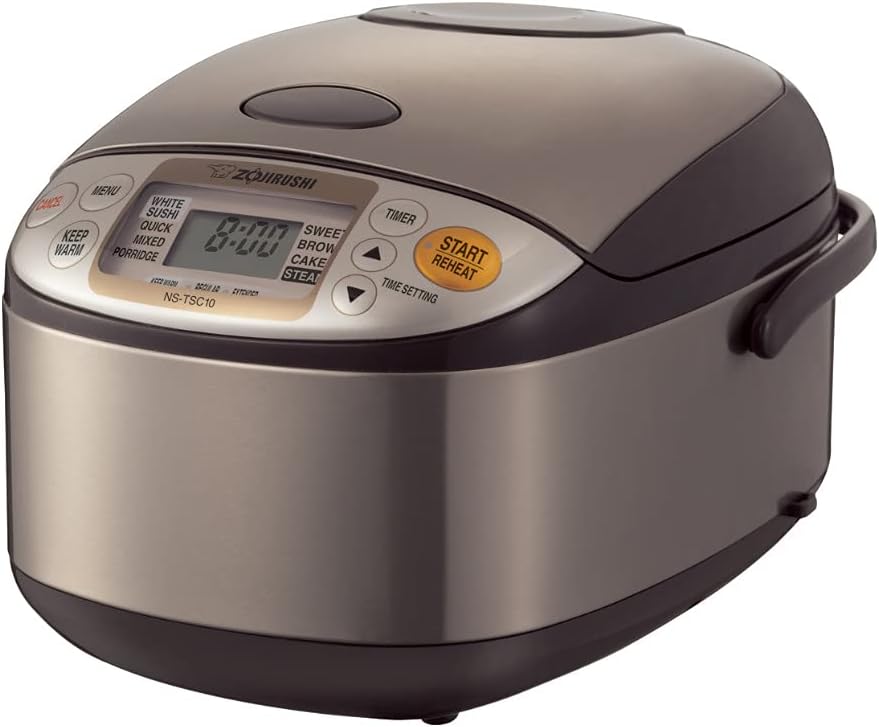
Rice is one of the most widely consumed staple foods on the planet, and yet getting it consistently right on a stovetop can be surprisingly tricky. Too much water, too little heat, or a moment of distraction can turn a simple pot of rice into a mushy or crunchy disappointment. This is where dedicated rice cookers come into the picture, and the Zojirushi NS-TSC10 5-1/2-Cup Micom Rice Cooker and Warmer is one of the appliances people often look into when they want more consistency in their kitchen routine.
This article walks through what this appliance offers, how it might fit into different households, and what to think about before adding it to your kitchen lineup. The goal here isn’t to tell you it’s the “best” anything — it’s to give you a grounded, informative look at what this type of rice cooker does and who might find it useful.
What Is the Zojirushi NS-TSC10?
The NS-TSC10 is a mid-sized rice cooker from Zojirushi, a Japanese company that has been manufacturing kitchen appliances, particularly rice cookers and thermal products, for several decades. This particular model falls into what’s called the “Micom” category, which stands for microcomputer. In practical terms, this means the appliance uses built-in electronic logic to adjust cooking time and temperature based on what it detects during the cooking process, rather than relying on a simple mechanical switch that just turns off when a certain temperature is reached.
With a stated capacity of 5.5 cups uncooked (which typically translates to a larger volume once the rice is cooked and has absorbed water), this model is generally positioned as a size suitable for small to medium households. The 1.0-liter measurement refers to the inner cooking pan’s capacity.
Key Features
Micom Fuzzy Logic Technology
One of the defining characteristics of this rice cooker is its fuzzy logic system. Unlike basic rice cookers that use a single on/off mechanism, fuzzy logic technology allows the appliance to make micro-adjustments during the cooking cycle. It can respond to variables like the amount of rice, the moisture content, and the ambient temperature, adjusting the cooking time and heat levels accordingly. This is intended to produce more even and consistent results across different batches, rather than a “set it and hope for the best” approach.
Multiple Cooking Settings
The NS-TSC10 typically includes several preset menu options tailored to different types of rice. This often includes settings for white rice, sushi rice, mixed rice (sometimes labeled as “mixed” or combined with other grains or vegetables), porridge, and sweet rice. Having distinct settings matters because different rice varieties and preparations require different water ratios and cooking durations. Sushi rice, for instance, tends to need a slightly different moisture balance than standard long-grain white rice, and porridge requires a much longer, gentler cooking process with more liquid.
Retractable Cord Design
A small but genuinely useful design detail on this model is the retractable power cord, which tucks into the base of the unit. This can make storage more convenient, especially in kitchens where counter space is limited or where the appliance gets moved in and out of a cabinet frequently.
Automatic Keep-Warm Function
Like most rice cookers in its class, the NS-TSC10 includes an automatic keep-warm mode that activates once the cooking cycle finishes. This function is designed to hold the rice at a temperature intended to keep it safe and palatable for a period of time after cooking, without continuing to cook or dry it out excessively. This is a practical feature for households where mealtimes aren’t always perfectly synchronized.
Delayed Timer Function
Many Zojirushi Micom models, including this one, include a programmable timer that allows users to set a delay so the rice finishes cooking at a specific time. This can be useful for planning meals around a work schedule or coordinating rice with other dishes that take longer to prepare.
Nonstick Inner Cooking Pan
The inner pan usually features a nonstick coating, which is intended to make rice easier to serve and the pan easier to clean afterward. A nonstick surface can also help reduce the amount of rice that sticks and burns to the bottom, a common frustration with lower-quality cookers or stovetop methods.
Compact and Home-Kitchen-Oriented Design
This model is generally considered compact relative to larger rice cookers meant for bigger households or commercial-style use. Its footprint is typically designed to fit comfortably on a standard kitchen counter without dominating the space.
How It Can Be Used
While the primary function of this appliance is, unsurprisingly, cooking rice, its versatility often extends a bit further depending on the model’s preset options.
Everyday White Rice — For many households, the core use case is simply preparing white rice for dinner, whether that’s jasmine, basmati, or standard long-grain rice. The fuzzy logic system is particularly geared toward optimizing this everyday task.
Sushi Rice Preparation — Home cooks interested in making sushi or other Japanese dishes at home may appreciate a dedicated sushi rice setting, which is calibrated to produce the stickier, more tightly textured rice needed for rolling.
Porridge or Congee — The porridge setting can be useful for those who enjoy congee, jook, or similar rice porridge dishes, which are popular across many Asian cuisines and require a longer cooking time with significantly more water.
Mixed Rice Dishes — Some users incorporate grains, beans, or vegetables into their rice using the mixed rice setting, which can allow for simple one-pot meal preparation.
Reheating and Keeping Rice Warm for Gatherings — Because of its keep-warm function, this type of cooker can also serve a practical role during gatherings or family meals where rice needs to stay at serving temperature for an extended period without being reheated repeatedly.
Meal Prep Planning — With the delay timer, some people use the cooker as part of a broader meal-prep routine, timing the rice to finish alongside other components of a meal.
Who It May Be Suitable For
This type of rice cooker tends to appeal to a fairly broad range of users, though it’s worth thinking about your own household size and cooking habits before deciding if it’s a good fit.
- Individuals or small families who regularly eat rice and want a more hands-off, consistent cooking method compared to stovetop preparation.
- Home cooks interested in Japanese or other Asian cuisines, given the specialized settings for sushi rice and porridge.
- People with limited kitchen space who want a compact appliance rather than a large-capacity cooker meant for bigger batches.
- Those who value convenience features, such as delayed timers and automatic warming, particularly if meal timing varies day to day.
- Cooks looking to reduce the guesswork involved in achieving a consistent rice texture, especially if they’ve had inconsistent results with stovetop methods in the past.
On the other hand, this may not be the ideal fit for very large households or those who regularly cook large batches of rice for bigger family gatherings, as the 5.5-cup uncooked capacity is generally better suited to smaller quantities.
Important Things to Consider
Before purchasing any kitchen appliance, it helps to think through a few practical points:
Capacity Relative to Household Size — It’s worth calculating your typical rice consumption. A 5.5-cup uncooked capacity generally yields enough cooked rice for a handful of servings, which may or may not match your household’s needs, particularly for entertaining or larger families.
Countertop Space and Storage — While this model is on the more compact side, it’s still worth measuring your intended storage or counter spot beforehand to make sure it fits comfortably alongside other appliances.
Learning the Settings — Micom rice cookers with multiple presets can take a small adjustment period to learn which setting works best for your preferred rice type and texture preference. Referring to the included instruction manual for water-to-rice ratios is generally recommended, especially early on.
Cleaning and Maintenance — Like most rice cookers, proper care of the inner pan, the lid, and the steam vent contributes to the appliance’s longevity and consistent performance. Following the manufacturer’s cleaning guidance can help avoid residue buildup over time.
Electrical Requirements — As with many kitchen appliances, it’s worth double-checking voltage compatibility, particularly for anyone purchasing from outside the region the product was originally designed for.
Long-Term Value Versus Basic Cookers — Micom and fuzzy logic cookers are generally positioned above basic on/off rice cookers in terms of features and technology. Whether that additional functionality is worth it depends on how much you value consistency, specialized presets, and convenience features like timers.
Comparing General Categories of Rice Cookers
To put this appliance into context, it can help to understand the broader landscape of rice cooker types without singling out specific competing brands or products.
Basic On/Off Rice Cookers — These are typically the most straightforward and often the most budget-friendly option. They usually cook rice using a simple thermostat mechanism that switches to “warm” once the water has evaporated and the temperature rises. They tend to work well for plain white rice but often lack specialized settings for other rice types or dishes.
Micom (Microcomputer) Rice Cookers — This category, which includes the NS-TSC10, uses electronic sensors and programmed logic to fine-tune the cooking process. These cookers generally offer more preset options and are designed to produce more consistent results across different rice varieties, though they usually come at a higher price point than basic models.
Induction Heating (IH) Rice Cookers — These represent a more advanced category, using electromagnetic induction to heat the inner pan more evenly and precisely than traditional heating elements. IH cookers are often considered a step above Micom models in terms of temperature control, though they typically carry a higher price as well.
Multi-Cookers with Rice Functions — Some households opt for multi-purpose appliances that include a rice-cooking setting among many other functions, such as pressure cooking, slow cooking, or steaming. These can offer more versatility for other types of cooking but may not always match the rice-specific precision of a dedicated rice cooker.
Understanding where a Micom cooker like the NS-TSC10 sits within this spectrum can help you decide whether its feature set aligns with your cooking habits and budget expectations, without needing to view any one category as universally superior.
Frequently Asked Questions
Does this rice cooker work for grains other than rice? While it’s primarily designed and optimized for various types of rice, some users experiment with grains like quinoa using the appropriate liquid ratios, although results may vary and it’s generally recommended to consult the manual or manufacturer guidance for best practices with non-rice grains.
How long does the keep-warm function typically last? Most Micom rice cookers are designed to keep rice warm for several hours after cooking, though it’s generally advisable not to leave rice on warm indefinitely, both for texture and food safety reasons.
Is this cooker suitable for someone new to using a rice cooker? Many people who are new to using rice cookers find preset options helpful, since the settings can reduce some of the guesswork involved in achieving a suitable texture, though there is typically a short adjustment period to learn the appliance’s specific settings.
Does the retractable cord affect the appliance’s overall size? The retractable cord is primarily a storage and convenience feature and is generally not intended to significantly change the overall footprint of the unit itself.
Can it be used to reheat rice that was cooked separately? Some rice cookers include a reheat function, though it’s worth checking the specific settings on this model to see whether reheating previously cooked rice is supported, as this can vary between models.
How does the delay timer function work? The delay timer typically allows users to set a specific time for the rice to finish cooking, which can be useful for planning meals in advance. The exact process for setting this usually involves the control panel and is explained in the accompanying instruction manual.
Conclusion
The Zojirushi NS-TSC10 5-1/2-Cup Micom Rice Cooker and Warmer represents a mid-tier option in the broader world of rice cookers, combining fuzzy logic technology, multiple cooking presets, and convenience features like a delayed timer and automatic keep-warm function. It’s generally positioned for individuals, couples, or small families who want more consistency and specialized cooking settings than a basic rice cooker typically offers, without stepping up to the higher price point of induction heating models.
As with any kitchen appliance purchase, it’s worth weighing your household’s typical rice consumption, available counter or storage space, and how much you value the added presets and technology against more basic alternatives. Taking a bit of time to understand your own cooking habits can go a long way toward figuring out whether this type of appliance fits naturally into your kitchen routine.
Leave a Reply